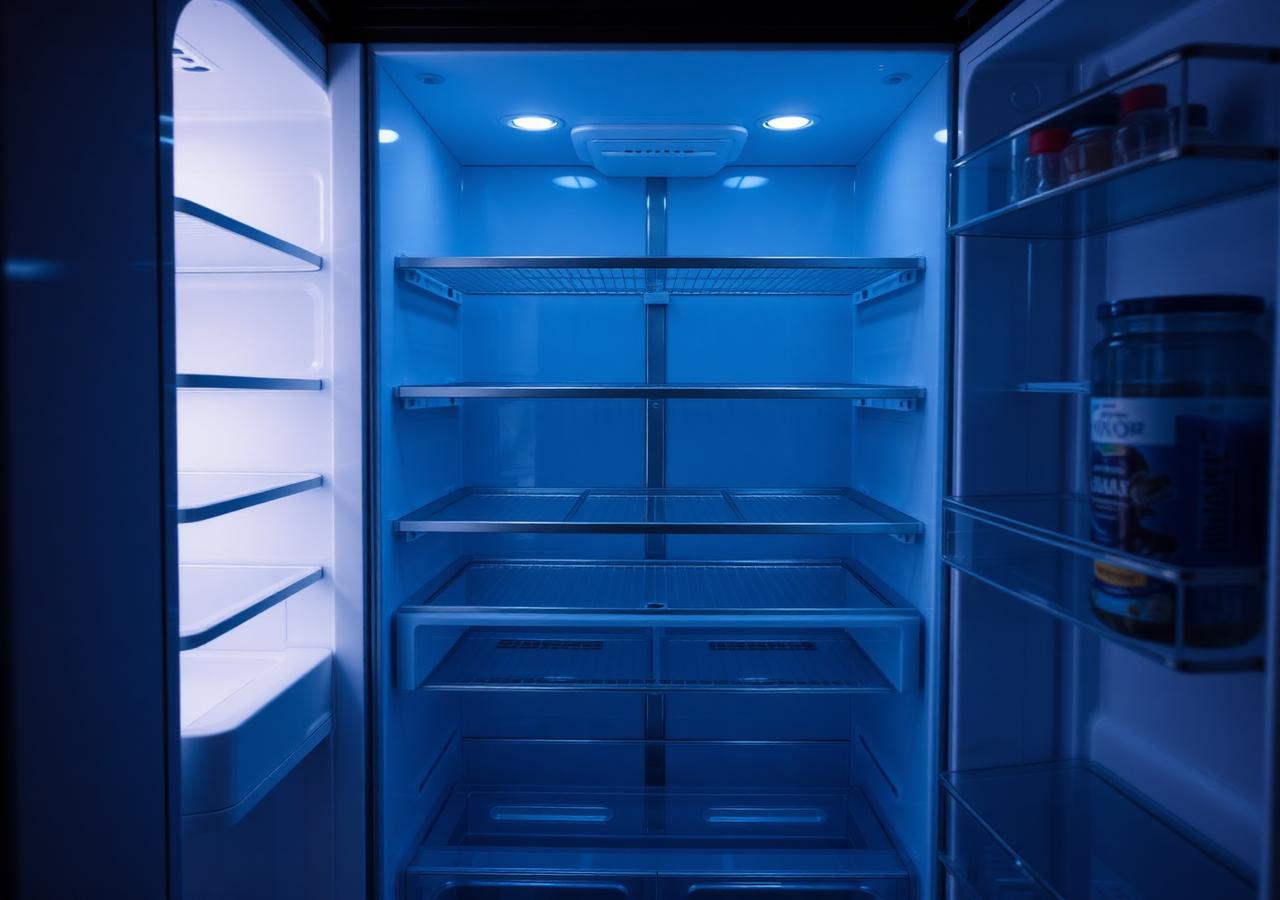
Warm fridge, cold freezer? Or warm both?
Diagnosis starts by isolating where the cooling has failed. A fridge with a warm fridge compartment but a still-cold freezer is a very different fault to a fridge where both compartments are warm.
Check 1 — Airflow
Fridges rely on air circulation. An overloaded fridge, or a fridge with items pressed against the rear wall, can restrict airflow enough to raise the compartment temperature by 3–5°C. Empty the fridge, leave a 2 cm gap between items and the rear wall, and give it 12 hours.
Check 2 — Door seal
A perished door seal (the rubber gasket around the door) is the single most common cause of a fridge that "does not cool properly". Test it by closing the door on a £5 note — you should feel firm resistance when you pull the note out. If the note slides out freely, replace the seal. It's a 10-minute job and a £25 part.
Check 3 — Coils and vents
Pull the fridge out and look at the coils on the back. A thick layer of dust acts as insulation and stops the coils from shedding heat. Vacuum them clean. On modern fridges the coils are often on the underside — a nozzle vacuum and a torch will reach them.
Check 4 — Thermostat
A stuck thermostat is a classic older-fridge failure. Turn the dial through its full range and listen — you should hear a click, followed by the compressor either starting or stopping. If nothing happens at any dial position, the thermostat has failed. A replacement thermostat is £15–£30 and takes an hour to fit.
Check 5 — Defrost heater (frost-free models)
If your fridge is frost-free and you notice ice building up on the back wall of the freezer, the defrost heater has failed. The heater is a low-cost part (£15–£40 depending on model) but replacing it usually involves stripping the freezer compartment — allow 2–3 hours.
When to call an engineer — or replace the fridge
If none of the above resolves the issue, you are probably looking at a compressor or refrigerant fault. This is not a DIY job (F-Gas regulated) and, on a fridge more than 8 years old, is rarely worth the money.
Need the part? Search our categories or contact us with your appliance's model number and we will source the right component.